"I want to try golf — but where do I even start?" Most beginners hit this wall first. Buy clubs first, or go to the range first? Should I sign up for lessons? The more you research, the more information piles up, until many people end up frozen instead of started.
Here's the answer up front. The recommended order is five steps: (1) get to know the game, (2) gather the bare-minimum gear, (3) hit balls at the driving range, (4) learn the fundamentals, (5) make your course debut. You don't need to buy a full set of clubs at the start — rentals at the driving range are all you need to begin.
This article walks through each step, covering what to do and how much of it. By the end, you'll know exactly what to do this weekend.
Step 1: Get a Rough Picture of What Golf Is
The first step isn't gear or practice — it's understanding the shape of the game. That doesn't mean studying the rulebook. You only need these three points.
- Golf is a sport where fewer strokes (a lower score) is better
- A round is 18 holes, played on foot over several hours
- You practice mainly at the driving range, and you play for real at a golf course
Just watching pro tournaments or lesson videos on TV or YouTube is enough to absorb the atmosphere. The important thing here is not trying to understand everything. The finer points of rules and etiquette stick far better once you've actually started hitting balls.
For now, all you need is a mental map: "so that's how golf flows." That alone dramatically reduces the hesitation in the steps that follow.
Step 2: Start With Only the Bare-Minimum Gear
Equipment is where beginners most often stall. It's easy to assume you can't start without a full setup, but in reality you need very little at first.
- A glove (typically for the left hand; golf shops carry them at entry-level prices)
- Comfortable clothes and sneakers
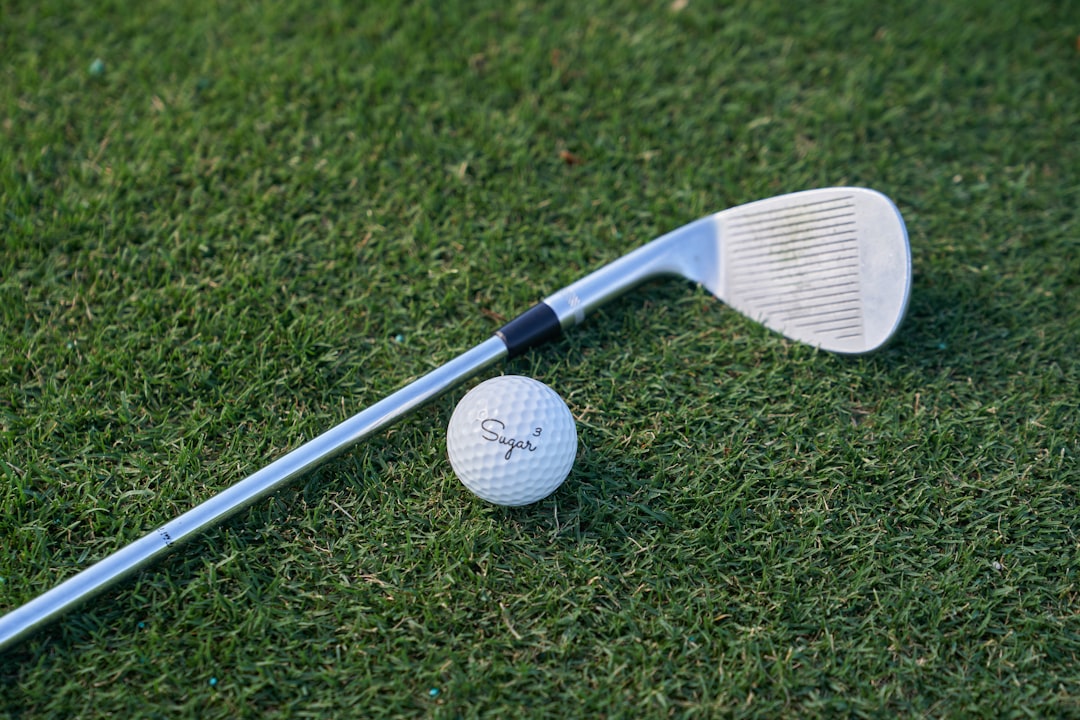
Clubs can be rented at most driving ranges. Hit with rentals a few times, and only start thinking about your own clubs once you feel this is something you'll stick with. That order lets you test your chemistry with golf before spending real money. For the full picture of startup costs including a club set and shoes, see our breakdown of what it costs to start golf.
Getting picky about equipment can wait. The goal at this stage is simply to eliminate "I can't start because I don't have the gear" as an excuse.

Photo by Daniel Stenholm on Unsplash
Step 3: Make Your Range Debut and Learn What Contact Feels Like
Gear in hand, it's time for your driving range debut. Set your first goal not at "hitting it well," but at "experiencing what it feels like to strike the ball with the club."
For your first session, start with a shorter club — a 7-iron or pitching wedge — and small swings. Going straight to full-throttle driver swings is the fastest way to miss everything and lose heart. Whiffs and balls squirting sideways are completely normal for a beginner. There is zero need to compare yourself to the skilled players around you.
That said, "I feel too self-conscious to go" is a worry we hear constantly. We've unpacked that anxiety and how to deal with it in our article for beginners who feel embarrassed at the driving range. And if you don't have a friend to tag along, no problem — read how a solo first trip to the driving range works and you can debut on your own without a hitch.
Step 4: Learn the Fundamentals Early
After a few range sessions, if you're feeling "I want to get better," consider getting the fundamentals taught to you as early as possible. There are several routes: a golf school, one-off lessons at the range, or an experienced friend watching your swing.
The reason to learn early is that golf is a sport where self-taught habits harden fast. Your grip and your setup are lifetime assets if you learn them correctly at the start — but once a bad habit sets in, undoing it takes serious time.
If you'd rather go self-taught, limit yourself to one theme per practice session when trying things you learned from videos. Trying to fix everything at once is the classic pattern behind beginner plateaus.

Photo by Stockholm Paris Studio on Unsplash
Step 5: Don't Wait Until You're "Ready" for Your Course Debut
Many beginners think "I'll play a course once I'm better." You don't need to wait for perfect. A realistic benchmark: once your ball flies forward with some consistency, make your debut with an experienced golfer alongside you.
Getting on a course reveals a whole set of challenges the range never shows you — slopes, distance judgment, nerves. That experience transforms the quality of all your practice afterward. For your first round, forget the score. "Walk all 18 holes" and "stay prepared and move quickly so you don't hold up your playing partners" are entirely sufficient goals.
Before your debut, the minimum homework is a bit of putting and chipping practice, plus the basic etiquette — stay out of the hitter's way, know that there are moments to hustle between shots.
The Rules and Etiquette Worth Knowing Before You Play
Some beginners postpone their course debut out of a fear that they'll be in the way unless they've memorized the rulebook first. In practice, what you need on day one is a very short list. Your playing partners will fill in the details, and the rest is easier to absorb once you're actually out there.
The five worth having in your head:
- Don't stand in front of or in the eyeline of the person hitting, and stay quiet through their swing (this is safety as much as etiquette)
- The player farthest from the hole plays first (when in doubt, just check with your partners)
- Leave the course as you found it — rake the bunker, replace divots, repair ball marks on the green
- Shout "Fore!" loudly if your ball heads toward anyone
- Be ready to play before it's your turn (keeping pace is the etiquette)
Most of what gets called golf's "unwritten rules" collapses into that last one: don't hold up the course. Dress codes (collared shirts, no jeans) vary by club, so a quick check when you book removes the guesswork.
Almost nobody you play with cares about your stroke count. Once that lands, a lot of the pre-debut nerves drain away. If the nerves are still strong, what to do when your first round has you tense is worth reading beforehand.
Frequently Asked Questions
Can I start golf without being athletic?
Yes. Golf isn't a contest of speed or explosiveness — it's a game of hitting a stationary ball at your own pace. Improvement speed varies from person to person, but golf rewards persistence more visibly than most sports. Going at your own pace without rushing is, in the end, the fastest route.
When is the right time to buy clubs?
A good marker is when you've been to the range a few times and thought "I want to keep doing this." Used clubs or a beginner half set are plenty at first. Swinging a variety of rental clubs beforehand teaches you what weight and length feel right, which cuts down on buyer's remorse.
What should I practice first for the fastest progress?
The foundation is making contact with short clubs — a wedge, 9-iron, or 7-iron — using small swings. Driver practice can wait until you're striking the short clubs consistently. Also, putting and chipping translate directly to your score on the course, so it pays to start touching them early, a little at a time.
How long until I'm ready for my course debut?
There's no fixed standard, but "once the ball flies forward reasonably often" is a good marker. The time required depends entirely on how often you practice, so judge by your state, not the calendar. If you can play alongside an experienced golfer, an early debut is perfectly fine.
Are beginner club sets a bad idea?
Not at all. They put every club you need in your hands at once at a lower price, which is a sensible choice when you're starting out. Once you've played a while, you can replace individual clubs that don't suit you. What to buy first is covered in the order to buy beginner golf gear.
Is there anything I can practice at home?
Rolling putts on a putting mat and small rehearsal swings with a choked-down grip both work at home. Even without hitting balls, it's enough to check your grip and setup. Just make sure you have clearance to swing. How to make daily rehearsal swings count goes further.
Is there a personality that suits golf?
There's no personality you need in order to belong here. But cautious players and aggressive players trip over different things, so knowing your own tendency early saves you detours in practice. If you're wondering about fit, see the traits of golfers who take to the game.
What score should I expect after my debut?
Losing count is completely normal at first, and the number comes down in stages. The stage-by-stage benchmarks are in what's a normal score for a beginner, and the sense of timeline in how long beginners take to improve.
Key Takeaways
We've covered the path into golf in five steps. Here's the recap.
- Start with a rough picture of the game (perfect understanding not required)
- A glove and comfortable clothes are all the gear you need; rent clubs at first
- At the range, the goal is learning what contact feels like
- Learn grip and setup early, before bad habits form
- Don't wait for perfect — make your course debut early with an experienced companion
- Five basic rules are enough; the rest you pick up as you play
Read next
Get the order right, and starting golf is genuinely not hard. And since how you improve — and where you stumble — varies with personality, taking the Golf Profiler quiz (free, about 5 minutes) before you begin makes it easier to choose a practice style that fits you. Step one: head to your nearest driving range this weekend.