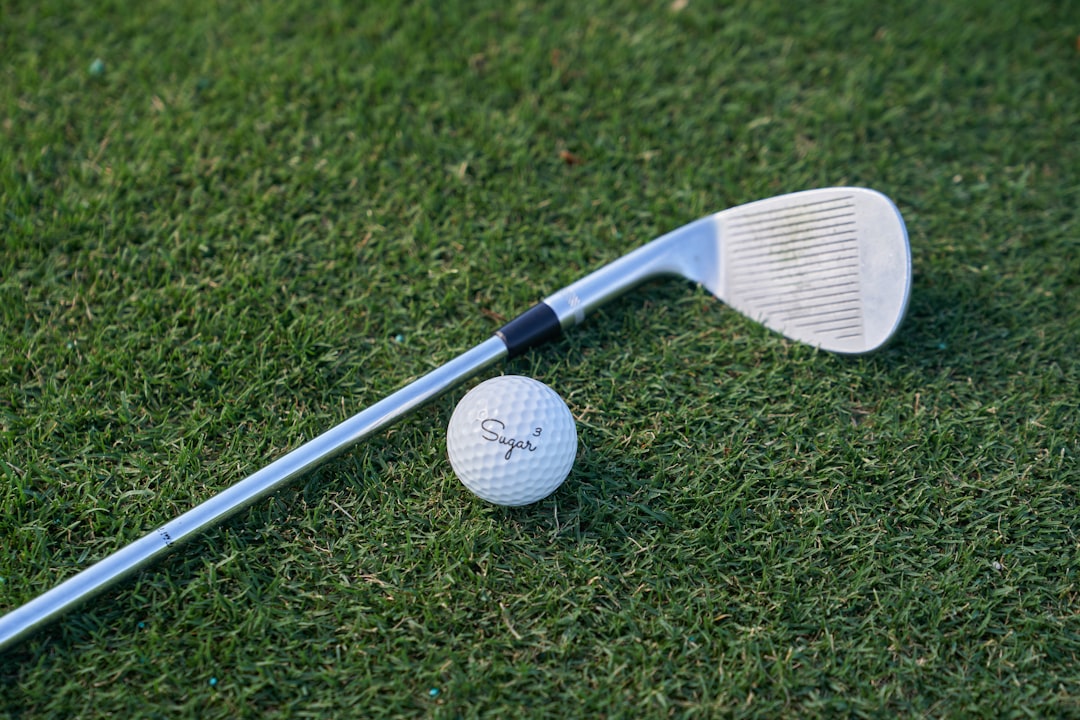
You went to the driving range for the first time, weren't sure what to do, hit a bucket of balls, and went home. Everyone around you seemed to know what they were doing, and you couldn't shake the feeling that your swing was a mess. For golf beginners, the hardest part of range practice is often this: you have no idea what you're actually supposed to be working toward.
Here's the thing — the difference between beginners who improve at the range and those who plateau usually isn't ball count or natural talent. It's the order they practice in. This article breaks down the first things a beginner should work on at the range into three steps, along with the common mistakes that hold people back.
The Bottom Line: Repeat the Same Motion Before You Chase Distance
Let's start with the conclusion. What a beginner should do at the range is not rip full-swing drivers. It's this: use a short club and a small swing, and learn to repeat the same motion every time.
In golf, the player who hits "roughly the same shot every time" improves faster than the player who hits "the occasional great one." The bigger the swing, the more room for error, so the shortcut is to groove the feeling of solid contact with a small, low-error swing first. One or two shorter clubs — a 7-iron, a 9-iron, or a pitching wedge — are all you need.
Once you've settled on this approach, you'll never stand in the bay wondering what to do. Let's walk through the three steps.
Step 1: Make Contact with a Hip-to-Hip Half Swing
The first step is a half swing, keeping the club between hip height on both sides — think 9 o'clock to 3 o'clock on a clock face.
How to Do It
- Club: 9-iron or pitching wedge
- Ball position: roughly the middle of your stance
- Ignore distance completely. Focus only on whether you caught it in the middle of the clubface
The half swing looks unglamorous, but it contains everything that matters in golf: your setup, your distance from the ball, and the feel of the strike. When 7 or 8 balls out of 10 feel like "decent contact," you're ready for the next step.
Reset Before Every Ball
Don't rake balls over and fire them off assembly-line style. Step away and set up fresh for every shot. Building the habit of addressing the ball the same way every time not only stabilizes your motion — it becomes a reliable routine you can lean on when nerves hit on the course.

Photo by Joan Tran on Unsplash
Step 2: Widen to Shoulder-to-Shoulder and Move Up to the 7-Iron
Once you're making contact with the half swing, widen your arc to shoulder height on both sides — roughly 10 o'clock to 2 o'clock. The key is not to jump straight to a full swing. Expanding your swing gradually means that when things break down, you can pinpoint where they broke down.
Move up in clubs gradually too, from the 9-iron to the 7-iron. Longer clubs put you farther from the ball and are harder to hit. If you can send a 7-iron reasonably far forward with a shoulder-to-shoulder swing, your range practice is well ahead of the beginner curve.
What matters here is having the courage to go back a step when contact falls apart. Shrink the swing. Drop back to the shorter club. The golfers who don't treat this "going back" as a chore are the ones who end up improving fastest.
Step 3: Pick a Target and Raise the Quality of Every Ball
Once you're making consistent contact, it's time to raise the quality of your practice. Concretely: pick a target for every single ball.
- Choose a target every time — "the sign at the back right," for example
- Before you hit, stand behind the ball and confirm your target before setting up
- After the shot, note for yourself which way it flew relative to your aim
Fifty balls hit at a target teach you more than a hundred hit on autopilot. On the course, the situation changes with every shot, so practicing "pick a target, then set up" every time is a direct rehearsal for the real thing.
If your course debut is coming up, read what to expect and how to prepare for your first round as well — it will give you a clearer picture of how far your range game needs to be before you tee it up.
3 Practice Mistakes Beginners Make
Golfers who work hard but struggle to improve tend to share a few patterns.
Hitting Nothing but Driver
The driver is the longest, hardest club in the bag. It's thrilling to hit, but a long stretch of mishits erodes both your form and your confidence. Build your practice around irons, and save the driver for the last 10–20 balls.
Making Ball Count the Goal
When you get tired, your swing falls apart — every time. And repeating a broken motion teaches your body the broken motion. Prioritize "finishing on a good swing" over "the satisfaction of hitting a lot of balls."
Comparing Yourself to the Next Bay
At the range, it's hard not to measure yourself against the good players around you. But range distance and actual scores are two different things. Swinging harder out of frustration gets you nowhere — staying locked into your own steps is far more productive. If hitting balls in front of other people makes you tense, the mindset tips in how to handle first-round nerves work just as well at the range.

Photo by Wilson Stratton on Unsplash
Frequently Asked Questions
How many balls should I hit at the driving range?
As a beginner, aim for around 50–100 balls, and stop while you can still focus. Grinding on while exhausted destabilizes your swing and lowers the value of the session. Wrapping up while you still "want to hit a few more" also keeps you hungry for the next visit.
How often should I go?
Ideally about once a week — keeping the gaps short makes it easier to hold onto the feel. But the frequency you can sustain matters most. Even twice a month moves you steadily forward if each session has a theme. Practice swings at home are a great supplement too.
Can I go to the range without my own clubs?
Most ranges offer rental clubs, and showing up empty-handed is generally fine. The one thing worth buying is a glove that fits your hand — it prevents blisters and makes practice far more comfortable. Check your local range's website in advance to be sure.
Can I make my course debut with only range practice?
If you can get your irons airborne and moving forward at the range, you're absolutely ready to debut. That said, the course involves plenty the range doesn't — putting, chipping, shots from slopes — so don't worry too much about your first score. For setting goals after your debut, see what scores beginners should aim for.
Summary
Range practice as a beginner moves you steadily forward — as long as you get the order right.
- Your first goal isn't distance, it's repeating the same motion
- Step 1: half swings with a short club. Step 2: gradually widen the swing and lengthen the club. Step 3: pick a target for every ball
- Driver-heavy sessions, chasing ball count, and comparing yourself to others are what stall progress
- When things fall apart, go back a step
How you structure your practice also reveals your personality — are you a grinder, or do you get bored easily? Take the Golf Profiler quiz (free, about 5 minutes) to learn your type and find a way of practicing that actually sticks. At your next range session, start with 9-iron half swings.