What if I whiff it and everyone laughs? What if I top ball after ball on my course debut and annoy my playing partners — and the group behind us? When you're new to golf, the eyes around you feel more important than where the ball goes. You know intellectually that it's normal for a beginner to feel embarrassed, but that squirming self-consciousness doesn't yield to logic.
It's hard to admit to the friend who invited you, but honestly, you're dreading both the range and the next round. Grit your teeth through that state for long enough, and you'll sour on golf itself before you ever get good at it.
This article unpacks what that "I'm bad and everyone can see it" feeling really is, then offers preparation and perspective that shrink it down to a manageable size.
Here's the conclusion up front: the embarrassment doesn't come from actually being watched — it comes from overestimating how much you're being watched. People notice you far less than you think. And what experienced golfers want from a beginner isn't skill; it's pace of play and etiquette. Once those two truths sink in, the embarrassment won't vanish, but it becomes something you can handle.
Feeling Embarrassed About Being Bad Is a Road Almost Everyone Travels
Every low-handicapper cruising around the course today was, without exception, once a beginner. Whiffs, topped shots, fat shots. Golf is a sport where simply striking the ball with the middle of the clubface is hard — virtually no one hits it well from day one.
Even so, the embarrassment hits hard, and part of the blame lies with golf's structure. Both the range bay and the teeing area are set up like a recital: everyone hits one at a time, in turn. The whole group stops, waiting on your shot. That pause makes the watching eyes feel far heavier than they are.
In other words, you're not unusually self-conscious — golf as a sport is built to generate the feeling of being watched. Start by reframing it that way.
You're Almost Certainly Overestimating the Audience
So how much are people actually watching?
Think back: when a playing partner hits a bad shot, do you remember the details? Most people are too consumed with their own next shot, and other people's misses fade from memory within a few holes. It's even more true at the driving range — the golfer in the next bay is busy tracking their own ball flight and has no bandwidth to study yours.
We tend to feel that our failures draw more attention than they actually do. Psychology has a well-known name for this: the spotlight effect. The fact that it has a name tells you how many people carry the same false belief.
When you feel the eyes on you, try restating it: "the person watching right now isn't them — it's me." The audience for your embarrassment is usually yourself.

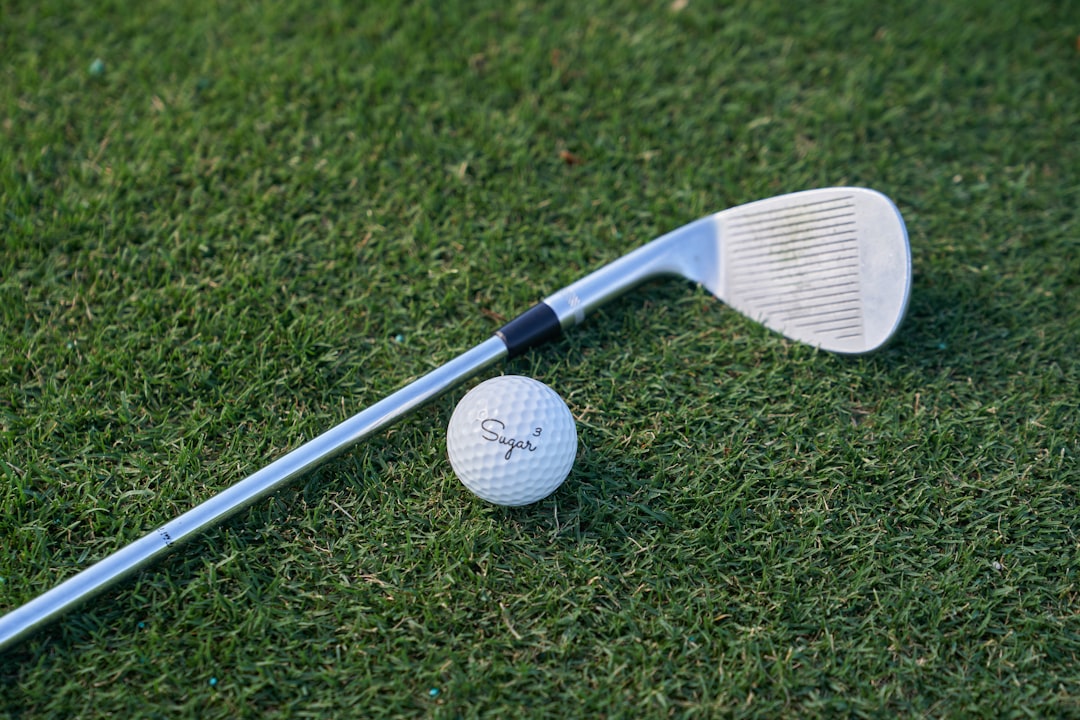
Photo by Daniel Stenholm on Unsplash
Preparation That Shrinks the Embarrassment
Beyond the mental reframe, some of it can be reduced with straightforward preparation.
Learn pace and etiquette before technique. When experienced golfers play with a beginner, what they notice isn't the number of misses — it's the flow of play. Carry two or three clubs when you walk to your ball, stay out of the hitter's sight line, don't run on the greens. Cover those basics and you'll be welcomed as "a pleasant beginner" no matter what your score is. Misses are forgiven; being unprepared stands out. Which, turned around, means preparation is the part fully within your control.
Choose where you put in your reps. There's no need to march into a packed driving range at peak hours. Start in the quiet windows — early morning, weekday midday — or at an indoor facility with private bays, and you can build experience with the audience pressure dialed down. Practicing alongside people at your own level thins the embarrassment even further.
Know the roadmap for getting started. What to buy, what order to practice in, when to make your course debut. Just seeing the whole picture reduces the anxiety of "am I doing something out of place?" If you're a woman wondering how to begin, see our guide to starting golf for women; if you're at the stage of gathering gear and clothing, start with what to prepare first when taking up golf.

Photo by Cristina Anne Costello on Unsplash
For the Days It Still Gets to You
Even with preparation, some days the embarrassment won't drop to zero. For those days, change who you're comparing yourself to.
Measured against the experienced players around you, a beginner will be "the bad one" indefinitely. But measured against yourself from last week, something has always moved: fewer whiffs, more balls flying forward. Shift the axis of comparison from "other people" to "my past self," and the very same day of practice takes on a different meaning.
One more thing. Embarrassment, flipped over, is proof that you care — that you want to do this properly and get better. If you didn't care, you wouldn't be embarrassed. That feeling isn't something to extinguish; it's fuel you can pour into practice. And if age is what's making you hesitant, as we cover in our guide to starting golf in your 40s, taking up the game as an adult is anything but unusual.
Frequently Asked Questions
What's the bare-minimum preparation before my first round?
Two things: groove two or three clubs that reliably send the ball forward, and get the basics of pace-of-play etiquette into your head. You don't need to master every club in the bag. Make "finishing the round on time" your top priority and your playing partners will view you plenty favorably.
I'm even embarrassed to go to the driving range
The range is, by design, the place where people who aren't good yet come to practice — and everyone there is focused on their own ball. If it still bothers you, lower the pressure by choosing quiet hours, an end bay, or an indoor facility. With repetition, your sensitivity to the imagined audience fades on its own.
I'm constantly worried I'm inconveniencing my playing partners
If that worry nags at you, say one sentence before the round: "I'm a beginner — please tell me if I'm doing anything wrong." Your partners now understand the situation and can look out for you, and you're freed from having to hide anything. The psychological load drops dramatically.
What if someone actually laughs at me or gives me a dirty look?
Every community has its share of people with no tolerance for mistakes. That's their problem, not yours. You get to choose who you play with and where you practice. Walking away from an environment that doesn't fit isn't running away — it's adjusting your environment.
Key Takeaways
- The embarrassment isn't the watching itself — it's an inflated estimate of how much you're being watched
- Everyone around you has their hands full with their own game, and forgets your misses almost immediately
- Experienced golfers are watching your pace and etiquette, not your skill — and those can be covered with preparation
- Move the comparison axis from "other people" to "my past self," and embarrassment converts into momentum
How sensitive you are to other people's eyes is itself a legitimate part of your playing personality. Take the Golf Profiler quiz (free, about 5 minutes) to learn your tendencies — it makes it far easier to choose a practice environment and improvement path that don't fight your nature.