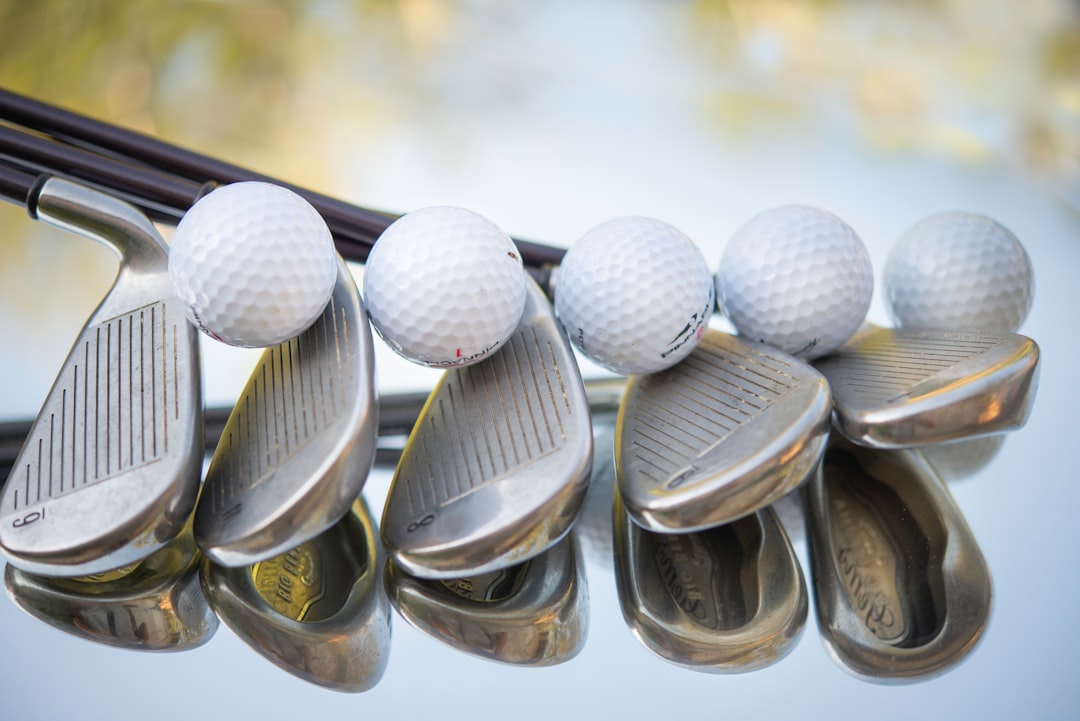
Right after hitting one out of bounds, you tell yourself "I'll get it back," press too hard, and bend the next one too. A three-putt lights the fuse, and the frustration rides with you all the way to the next tee. Then you finish the hole, look back, and realize the whole collapse traces to one single miss. Sound familiar?
The version of you that's seen red makes choices the calm version of you would never make. If you've found yourself searching for how to stay calm on the golf course, it's probably because you can feel it: you're losing strokes to emotion, not technique.
In this article, we'll lay out how the tilt happens, what you can do in the moment on the course, and how to prepare in advance so you tilt less in the first place.
The conclusion, up front, comes down to three points. First, don't try to talk your overheated brain down with self-lectures. Second, cool down through the body — your walking pace, your breathing. Third, decide before the round how you'll play the shot after a miss. The trick is not to think in the heat of the moment, but to lean on procedures you set while you were still calm.
Why You See Red Right After a Miss
What wells up immediately after a bad shot is, most often, the urge to get it back. Wanting to instantly recover what you lost is a natural reaction — but in golf, it works against you.
Chasing lost strokes makes your choices aggressive. Threading a gap out of the trees, going for a green you can barely reach, swinging as hard as you can. Risks the calm you would never take, the heated you judges as "makeable."
Anger and haste also hit your body. Your grip tightens, your tempo speeds up, and your normal swing disappears. With both your decisions and your motion out of order, one miss readily calls up the next.
The first thing to understand: getting heated after a miss happens to everyone. The problem isn't the heat itself — it's hitting the next shot while you're still hot.
Cooling Down Right There on the Course
An overheated state rarely settles just because you order yourself to calm down. Rather than suppressing it from the top down, it's far easier to bring it down through the body.

Photo by Willdwind / William Martret on Unsplash
Deliberately Slow Your Walk
When you're steamed, your stride speeds up. As you charge toward your ball, your head keeps replaying the miss. Instead, make a point of walking slowly to your next shot. Just slowing your pace gradually brings the temperature down with it. Golf is a game that guarantees walking time between shots — being able to use that time to cool off is an advantage unique to this sport.
Breathe with a Long Exhale
Before your next shot, make time for a slow, extended exhale. Breathing out longer than you breathe in is a simple, widely used way to settle an agitated state. If you feel your shoulders drop, that's enough. Lifting your gaze to the scenery in the distance also helps pull your mind off the miss in front of you.
Run Your Routine More Carefully Than Usual
The hotter you are, the more tempting it is to skip your pre-shot routine. Check the target from behind the ball, take your practice swing, step into your address. Tracing those steps more deliberately than usual is the switch that resets a scrambled tempo. For more on the thinking behind routines, see concrete ways to keep your composure.
Pre-Round Rules That Keep You from Tilting
Just as effective as in-the-moment fixes is setting rules while you're still calm — building a system that never asks your overheated brain to make the call.
For example:
- The shot right after a miss is not a "get it back" shot but a "restore the flow" shot — always take the safest available option
- In the trees, punch out sideways. If you're not sure you can reach, lay up
- On a hole where you've missed, lower the bar: bogey or double bogey counts as a success
The key is deciding these before the round. If you start weighing "should I play it safe?" in the moment, your spiked emotions will answer "go for it." With rules in place, there's nothing to weigh — you just follow them.
Another effective tool is a closing ritual for misses. For example, set a time limit: "I'm allowed to stew about the miss until I reach my ball. Once I'm there, I think only about the next shot." The idea isn't to forcibly erase the feeling — it's to give the frustration its allotted time, and then end it.
Hot-Headed Tendencies and How to Prepare at the Range
Given the same miss, some golfers reset instantly and others carry it for holes. The more competitive you are and the higher your standards, the more the gap between ideal and reality moves you. And if you know you're prone to tension in general, recovering from an agitated state tends to take longer too. For managing that side of things, see coping strategies for golfers prone to performance anxiety.

Photo by Luke Yang on Unsplash
There's preparation you can do at the driving range too. After a bad shot, instead of raking the next ball over immediately, set the club down, settle your breathing, and restart from your full routine. Rehearsing this "post-miss procedure" makes it far easier to reproduce on the course. Practice that includes recovering from misses is closer to game conditions than practice with no misses at all.
When results are on the line — a club competition, say — the emotional swings get even bigger. To prepare for those moments, see how to handle competition nerves.
Frequently Asked Questions
Once I tilt, I stay tilted for the rest of the round.
If you're a carrier, make your reset a physical action. Re-fastening your glove, switching the tee in your hand — a fixed gesture that signals "from here on, it's a new hole." Pairing the mental switch with a bodily movement makes the line far easier to draw than trying to flip it purely in your head.
My playing partners' play or comments set me off.
That's you reacting to something outside your control. You can't change them, so the realistic move is returning your attention to your own process. The moment irritation hits, mentally walk through the routine for your own next shot. Moving your attention back to your side of the fence is the single best remedy.
The harder I try to calm down, the worse it gets.
Thinking "I have to calm down" is itself an act of staring at your own agitation. Instead of aiming at calmness directly, do the actions first — slow your walk, lengthen your exhale — and the calm follows. The trick is reversing the order: not feelings first, but actions first.
Is a hot temper just my personality — unfixable?
Being emotionally reactive is part of who you are, and there's no need to force a change. What you can change is the procedure — what you do once the heat arrives. With pre-set rules and a closing ritual, even the most combustible golfer can keep the damage minimal. And honestly, that competitive fire is fuel for your golf, too.
Key Takeaways
- The post-miss urge to "get it back" is what produces reckless choices and tight swings
- Calm comes back through the body — pace, breath, routine — not through self-lectures
- The shot after a miss is a "restore the flow" shot; decide the safe play before the round
- A ritual that puts a time limit on frustration keeps you from carrying it
- Recovering from misses is a skill you can rehearse at the driving range
Whether you run hot, and whether you carry it, follows a personal pattern. Take the Golf Profiler quiz (free, about 5 minutes) and find out how you tend to unravel. Once you know your pattern, the rules you need to set become obvious.